The damage you can see after a collision is only part of the picture. While dents and scratches are easy to spot, an impact can also affect your vehicle’s structure, safety systems, or other critical components that aren’t immediately visible. That’s why a professional inspection is an essential first step before any auto collision repair begins.
At Karl Malone’s Body & Paint, serving drivers in Draper, Riverton, and the surrounding Salt Lake Valley, technicians perform comprehensive inspections to identify hidden damage before repairs begin. Understanding this process can help you make informed repair decisions.
Why a Collision Repair Inspection Is Important
A collision repair inspection goes beyond a quick visual check. Its purpose is to identify both visible and hidden damage, document the vehicle’s condition, and create an accurate repair plan. This helps technicians develop a repair plan that follows manufacturer repair procedures rather than focusing only on cosmetic damage.
Many modern vehicles are also equipped with advanced safety technologies that may require inspection after a collision. The National Highway Traffic Safety Administration (NHTSA) has long recommended that safety systems damaged in a crash, including seat belts, airbag systems, and other affected vehicle systems, be repaired, restored, or replaced before the vehicle returns to service.
What Do Technicians Check During a Collision Repair Inspection?
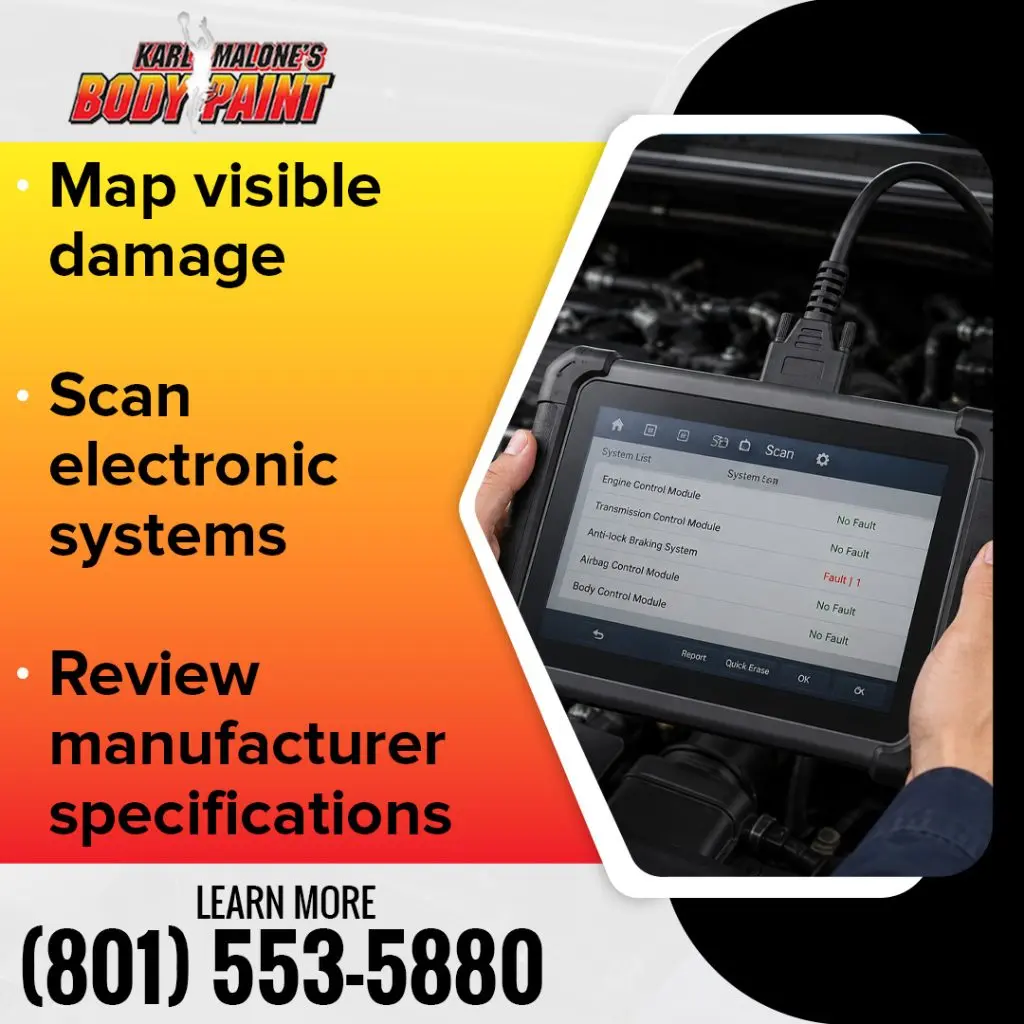
A professional inspection typically begins with documenting visible damage, including body panels, bumpers, lighting, glass, wheels, and tires. Technicians also record photos that support repair estimates and insurance claims.
Next, they inspect critical mechanical and safety-related components, such as:
- Steering and suspension
- Braking components
- Cooling system (when affected by the impact)
- Airbags and seat belt systems
- Vehicle electronics and warning lights
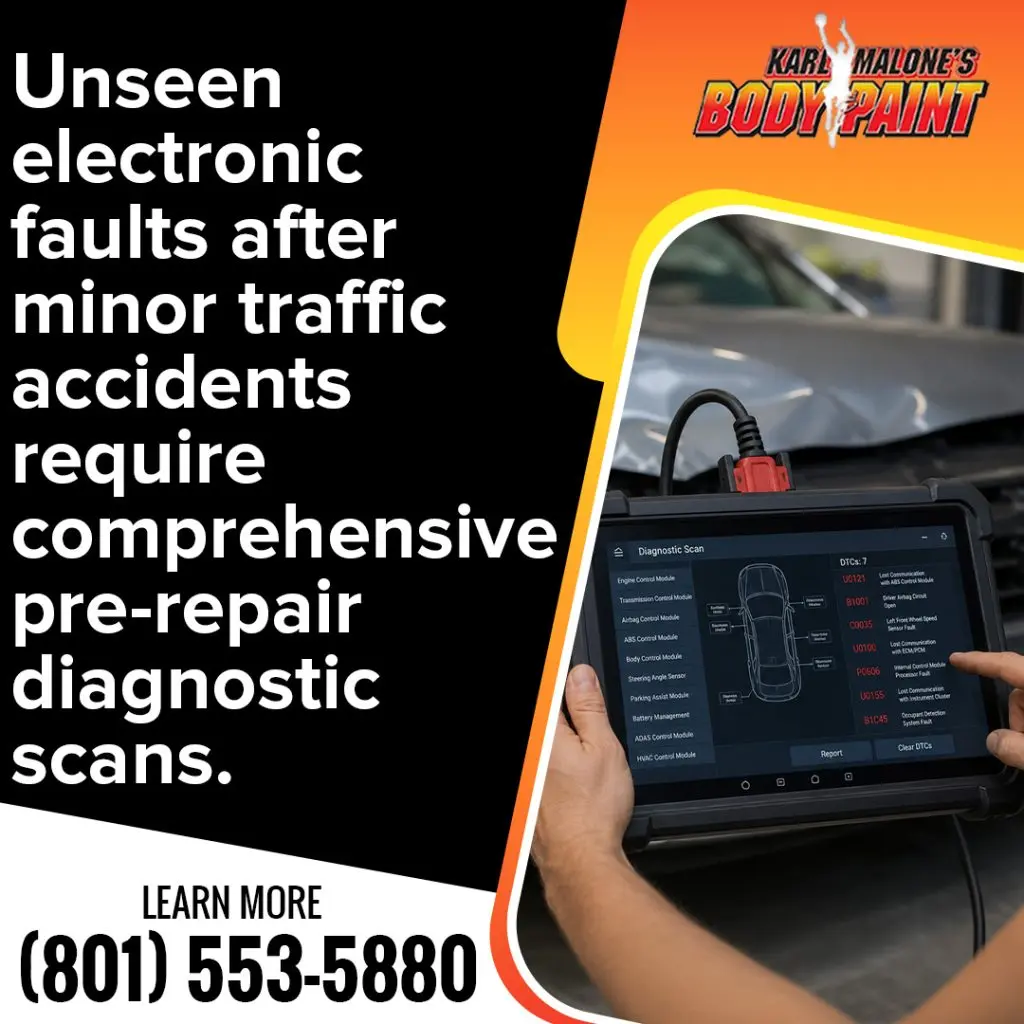
Depending on the vehicle manufacturer and the type of collision, technicians may perform required or recommended pre-repair diagnostic scans to identify electronic faults that are not visible during the initial inspection.
How Do Technicians Find Hidden Collision Damage?
Some damage cannot be seen from the outside. To evaluate the vehicle thoroughly, technicians use specialized measuring equipment and diagnostic tools.
Structural measurements help determine whether the vehicle’s frame or unibody remains within manufacturer specifications, while electronic scans check for faults that could affect driver-assistance systems or other vehicle electronics.
According to I-CAR’s Repairability Technical Support (RTS), many vehicle manufacturers require or recommend pre-repair and post-repair diagnostic scans following a collision because electronic faults may not be immediately visible and additional issues can arise during the repair process.
How Inspection Results Determine the Repair Plan
Once the inspection is complete, technicians use the findings to develop a repair plan. This includes identifying which components can be repaired, which require replacement, and whether manufacturer repair procedures call for additional inspections or calibrations.
It’s also common for additional damage to be discovered after disassembly begins. If that happens, the repair estimate may be updated, and the repair facility will typically communicate those changes before continuing work.
At Karl Malone’s Body & Paint, inspections are performed to provide a clear understanding of the vehicle’s condition before car accident repair begins, helping customers and insurers make informed decisions throughout the repair process.
What Happens After a Post-Collision Inspection?
After the inspection, you’ll usually receive a repair estimate and documentation outlining the recommended work. If you’re filing an insurance claim, this information helps support the approval process and ensures the necessary repairs are properly documented.
Before You Authorize Repairs
- Review the inspection findings.
- Ask questions about recommended repairs.
- Confirm how the repair plan aligns with manufacturer procedures.
- Coordinate with your insurance company if applicable.
Choosing the Right Repair Facility
If you’re in the Riverton area, choose a collision repair shop with manufacturer-trained technicians, advanced diagnostic equipment, and experience following OEM repair procedures. These factors help ensure a thorough inspection.
For drivers looking for a collision center near Riverton, UT, Karl Malone’s Body & Paint follows manufacturer-recommended repair procedures and holds certifications from Ford, General Motors, and Toyota. The shop is also the only Toyota Certified Collision Center in Utah, reflecting its commitment to manufacturer standards and ongoing technician training.
Making Confident Repair Decisions
A professional auto collision repair inspection is about much more than documenting visible damage. It provides the information needed to identify hidden issues, develop an accurate repair plan, and help restore your vehicle’s safety and performance.
Understanding what happens during the inspection can help you make informed decisions about your vehicle. Whether you’re seeking collision repair near Riverton, UT, or simply want to better understand the inspection process, contact Karl Malone’s Body & Paint at (801) 553-5880 or RBeck@GoMalone.com for more information.