A fender bender takes seconds. Choosing the wrong auto body shopcan cost you years of safety and value.
What Should Every Vehicle Owner Know Before Visiting an Auto Body Shop?
The right repair facility can mean the difference between a vehicle that protects your family and one that fails when you need it most. This is not an exaggeration. Federal safety standards have prevented over 860,000 deaths since 1968, but those protections only work when repairs restore vehicles to factory specifications. At Karl Malone’s Body & Paint in Draper, Utah, we see firsthand how repair quality affects long-term safety and vehicle value.
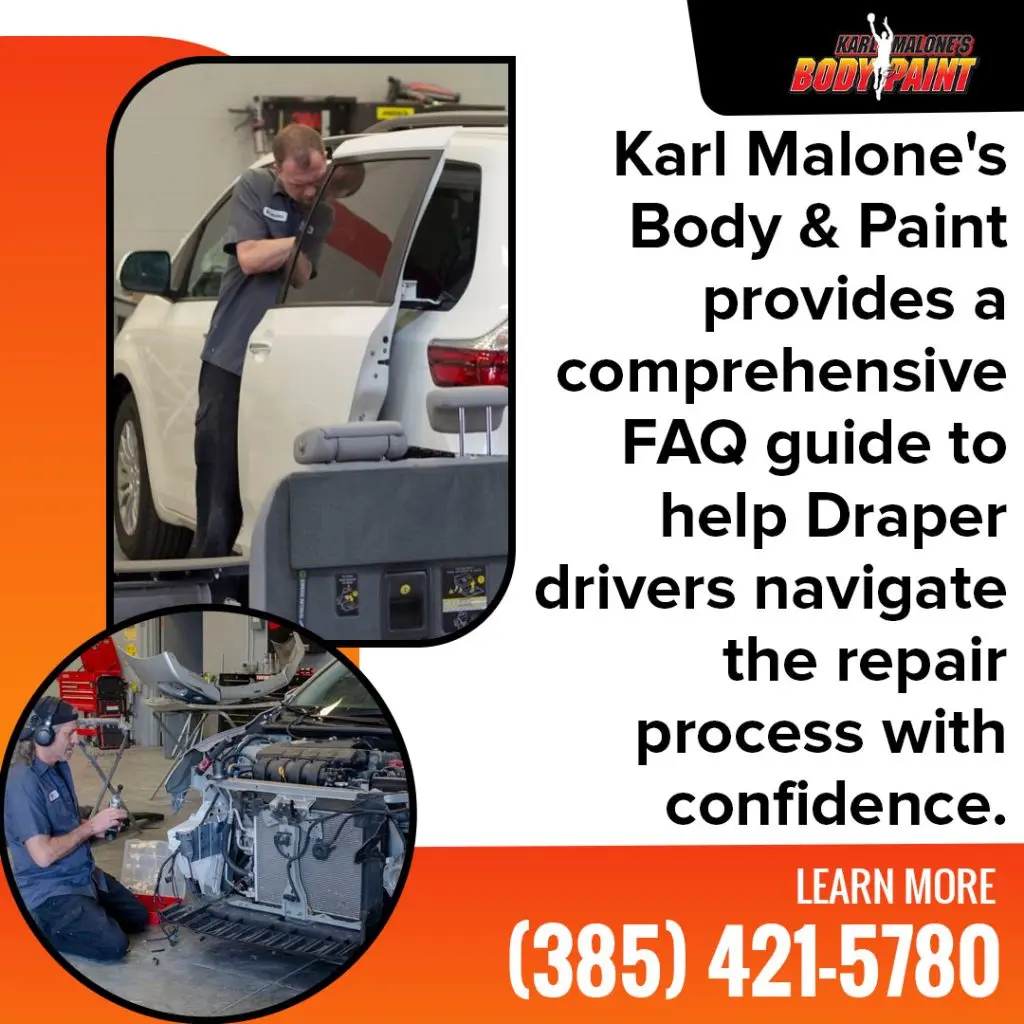
Most drivers visit auto body shops only a few times in their lives. The experience feels unfamiliar and overwhelming. Insurance paperwork piles up. Repair estimates contain technical language. Timeline promises seem vague. Meanwhile, your daily routine depends on getting your vehicle back quickly and correctly. These pressures lead many people to make rushed decisions they later regret.
We created this FAQ guide to change that pattern. Over 12 years of serving Salt Lake Valley and Utah County, our team has answered thousands of customer questions. We hold certifications from Toyota, Ford, and GM Collision Repair Network. We have helped families through minor fender benders and major collisions alike. The answers below reflect real concerns from real customers who trusted us with their vehicles.
How Do I Choose a Trustworthy Auto Body Shop?
Select a facility with manufacturer certifications, verified customer reviews, and transparent communication practices. These three factors separate reputable shops from those that cut corners. Look for certifications directly from vehicle manufacturers. These programs require shops to meet strict equipment, training, and repair procedure standards.
According to a consumer survey conducted for the National Institute for Automotive Service Excellence (ASE), about 41 % of vehicle owners say that industry-recognized technician certifications factor into their choice of a repair facility, and when informed about these certifications, nearly 77 % said certification would influence their decision in the future. This preference reflects growing awareness that certified facilities follow factory-approved repair methods.
When evaluating an auto body shop near you, ask these questions:
- Does the shop hold certifications from your vehicle’s manufacturer?
- Can they provide recent customer reviews with specific details?
- Will they explain the repair process before starting work?
- Do they offer written estimates and warranty information?
What Makes a Local Shop in Draper, UT, Different From Chain Facilities?
Local shops offer personalized service, direct communication with technicians, and accountability to the community they serve. At Karl Malone’s Body & Paint, our team lives and works in Draper. We see our customers at local stores and community events. This connection creates a different level of commitment than what corporate chains typically provide.
Our customer Jesse Egan shared this experience: “Can’t say enough about Anthony over at Body and Paint. Had a great first experience and he helped through some issues with a vehicle purchase. He ensured the quality of work and attention to detail were nothing but perfect for my car. I highly recommend him to anyone. Thank you for helping me out and picking up the ball when no one else seemed to care about the situation, I appreciate it!”
Local facilities also tend to build long-term relationships with customers. We remember your vehicle’s history. We know which repairs we have completed previously. This continuity improves service quality over time.
What Services Should a Quality Auto Body Shop Provide?
A full-service facility should offer collision repair, paintless dent removal, ADAS calibration, headlight restoration, and insurance claim assistance. These services address the range of issues vehicles face after accidents or weather damage.
Modern vehicles require more than traditional bodywork. Advanced Driver Assistance Systems (ADAS) need recalibration after many repairs. These systems include automatic emergency braking, lane departure warnings, and adaptive cruise control. The Insurance Institute for Highway Safety (IIHS) confirms that structural parts must exactly replicate original components to preserve crashworthiness.
Our service offerings include:
- Collision repair with OEM-certified procedures
- Paintless dent removal for hail and minor impacts
- ADAS calibration using manufacturer specifications
- Headlight restoration to improve night visibility
- Animal damage repair for wildlife collisions
- Rental car assistance during repairs
- Insurance claim processing support
How Long Does Auto Body Repair Typically Take?
Standard collision repairs average 10 days, though timing varies based on damage severity, parts availability, and insurance approval processes. Simple repairs like minor dents may take just a few days. Major structural work can extend several weeks.
Several factors affect repair timelines:
- Extent of visible and hidden damage
- Availability of manufacturer parts
- Insurance company inspection schedules
- Paint curing and drying requirements
- ADAS calibration appointments
We keep customers informed throughout the process. Our team provides regular updates on repair progress and any timeline changes. Mobbin 240 described this communication style:
“Mario was incredibly helpful and communicative throughout the entire process, keeping me informed every step of the way while getting my truck fixed and clearly explaining what was going on. He’s super cool, went above and beyond to turn a stressful situation into a smooth and pleasant experience, and genuinely helped save my truck when it mattered most. All the work was high quality and I’ll be going to Karl Malone’s Body & Paint for everything in the future!”
Why Do Manufacturer Certifications Matter for Auto Body Repairs?
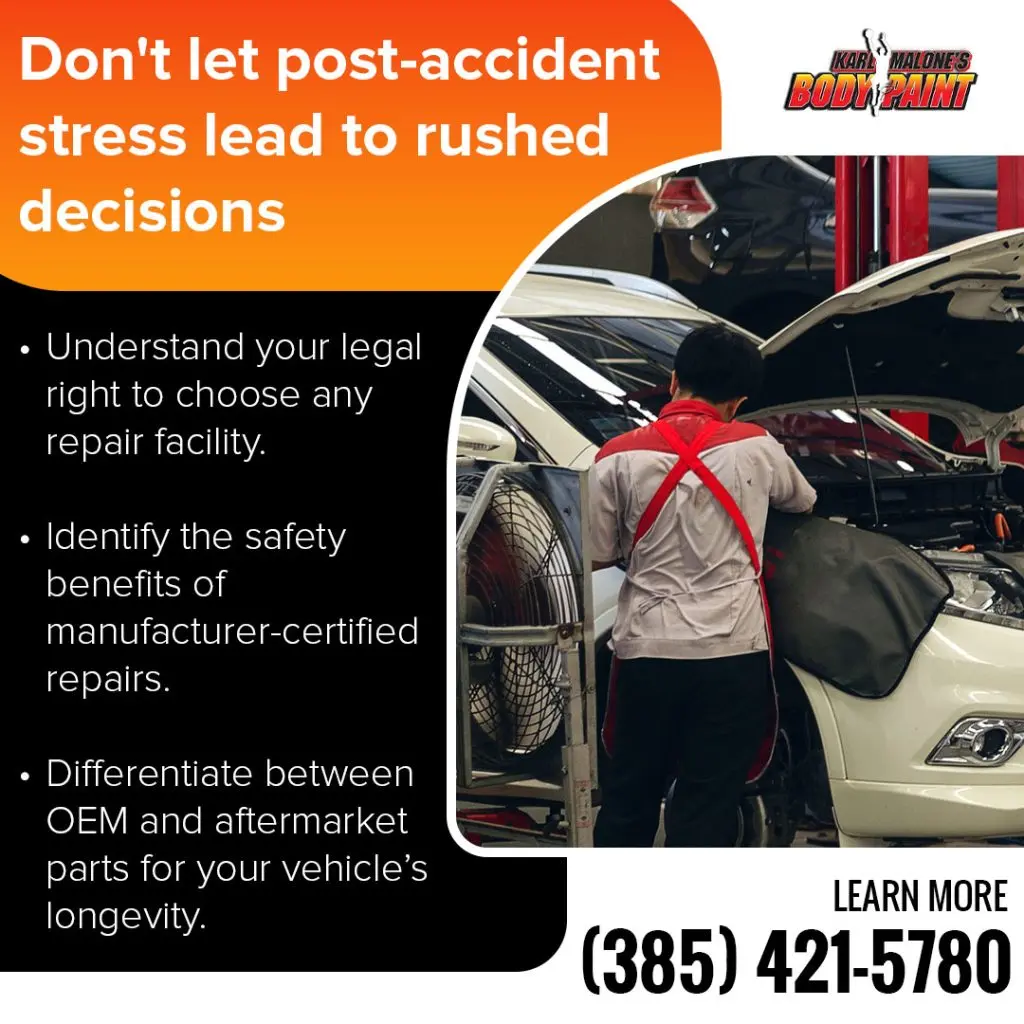
Certified shops have verified equipment, trained technicians, and approved repair procedures that maintain your vehicle’s safety systems. Vehicle manufacturers invest billions in engineering crash protection. Improper repairs can compromise these life-saving features.
Toyota, Ford, and GM certifications require auto body shops to meet specific criteria:
- Technician training on brand-specific repair methods
- Investment in manufacturer-approved equipment
- Use of OEM or OEM-equivalent replacement parts
- Regular audits to maintain certification status
At Karl Malone’s Body & Paint, our Toyota Certified Collision Center status means we repair Toyotas to factory specifications. The same applies to our Ford and GM certifications. Customers can trust that their vehicles will perform as designed after repairs.
Will My Insurance Cover Repairs at the Auto Body Shop I Choose?
You have the legal right to choose any auto body shop for your repairs, regardless of insurance company preferences. Insurance companies may suggest specific facilities, but they cannot force you to use them. We work with all major insurance providers.
Our insurance claim assistance includes:
- Filing initial claims on your behalf
- Coordinating with adjusters and inspectors
- Handling paperwork and documentation
- Negotiating coverage for proper repairs
- Arranging rental car assistance when needed
Approximately 80% of collision repairs involve insurance claims. Having a shop that handles the administrative process reduces stress during an already difficult time.
What Is the Difference Between OEM and Aftermarket Parts?
OEM parts come from vehicle manufacturers and match original specifications exactly. Third-party companies make aftermarket parts and may vary in quality. This distinction affects repair quality, warranty coverage, and long-term vehicle value. When safety systems depend on precise fit and materials, genuine/ OEM parts provide guaranteed compatibility.
At Karl Malone’s Body & Paint, we discuss parts options with every customer. We explain the differences and help you make learned decisions based on your vehicle type, warranty status, and budget.
How Can I Tell If Previous Repairs Were Done Correctly?
Check for paint color matching, panel alignment, consistent body gaps, and proper ADAS function. Poor previous repairs can affect vehicle safety and resale value.
Warning signs of substandard repairs include:
- Uneven paint texture or color differences between panels
- Doors or hoods that do not close properly
- Unusual wind noise at highway speeds
- Warning lights for safety systems
- Tire wear patterns indicating alignment issues
If you suspect previous repair problems, bring your vehicle for inspection. We can identify issues and recommend corrective actions.
What Questions Should I Ask Before Authorizing Repairs?
Ask about warranties, repair timelines, parts quality, and total cost breakdowns before approving any work. A reputable auto body shop will answer these questions clearly and provide written documentation.
Key questions to ask an auto body shop:
- What warranty do you provide on parts and labor?
- How will you communicate progress during repairs?
- Do you use OEM or aftermarket parts?
- What happens if you discover additional damage?
- Can you provide references from recent customers?
Karl Malone’s Body & Paint offers transparent estimates and keeps customers informed throughout the repair process. Informed customers make better decisions.
Key Takeaways
- Choose certified facilities: Manufacturer certifications from Toyota, Ford, and GM verify that shops meet strict equipment, training, and repair standards.
- You control the decision: Insurance companies cannot force you to use a specific auto body shop. Select the facility you trust most.
- OEM parts preserve safety: Original equipment parts match factory specifications and maintain your vehicle’s crashworthiness.
- Communication matters: The best shops provide regular updates and explain repairs in plain language. Ask questions before authorizing work.
- Local reputation counts: Community-based shops build long-term relationships and remain accountable to the customers they serve.
- Certifications protect value: Proper repairs maintain warranty coverage, resale value, and most importantly, occupant safety.
- Timelines vary: Standard repairs average 10 days, but damage severity, parts availability, and insurance processes affect actual completion dates.
- Previous repairs matter: Poor past work can compromise safety systems. Have your vehicle inspected if you notice warning signs.
Schedule Your Free Estimate Today
Finding a reliable auto body shop near you does not have to be stressful. At Karl Malone’s Body & Paint, we combine manufacturer certifications, experienced technicians, and genuine customer care to deliver repairs you can trust. As the best auto body shop in Draper, UT, we treat every vehicle like it belongs to family.
Contact us today at (801) 553-5880 or RBeck@GoMalone.com or visit our facility in Draper, UT, Monday through Friday, 8 am to 5:30 pm, and Saturday, 8 am to 12 pm.
We serve Draper, Salt Lake Valley, Utah County, and nearby areas. Request an estimate online or schedule an appointment to experience the Karl Malone difference.