Dealing with hail damage can feel overwhelming. As a driver, you worry about everything from repair costs to finding a shop you can actually trust. It’s natural to feel stressed when you spot a field of dents across your hood and roof or a crack spidering across your windshield. Our goal is to turn this stressful situation into a manageable process by providing you with clear steps for navigating repairs.
Repairing hail damage on a car isn’t just popping out the obvious dents; it takes a careful look at every panel, every piece of glass, and the trim in between. This guide compiles hands-on knowledge from our technicians in Draper, UT, so you can handle each step with confidence, from assessing the damage to working with your insurer and choosing the right hail damage repair shop. Let’s start by making sure nothing is overlooked in identifying new problems caused by those pesky hailstones.
To navigate the hail damage repair process without stress, begin by thoroughly assessing the damage and documenting it with photos to support your insurance claim. Then, promptly contact your insurance provider to understand coverage, get a detailed repair estimate from a reputable auto body shop, and maintain proactive communication throughout the entire claims and repair process to ensure a smooth experience.
Identifying Hail Damage
Identifying hail damage might seem straightforward, but it requires a keen eye to ensure nothing is overlooked. When a storm passes, the first instinct may be to rush through a quick look at your car. However, taking the time to perform a thorough examination — and following a clear set of steps to take after hail damage hits your car — can save you from costly surprises later on.
Visible Damage
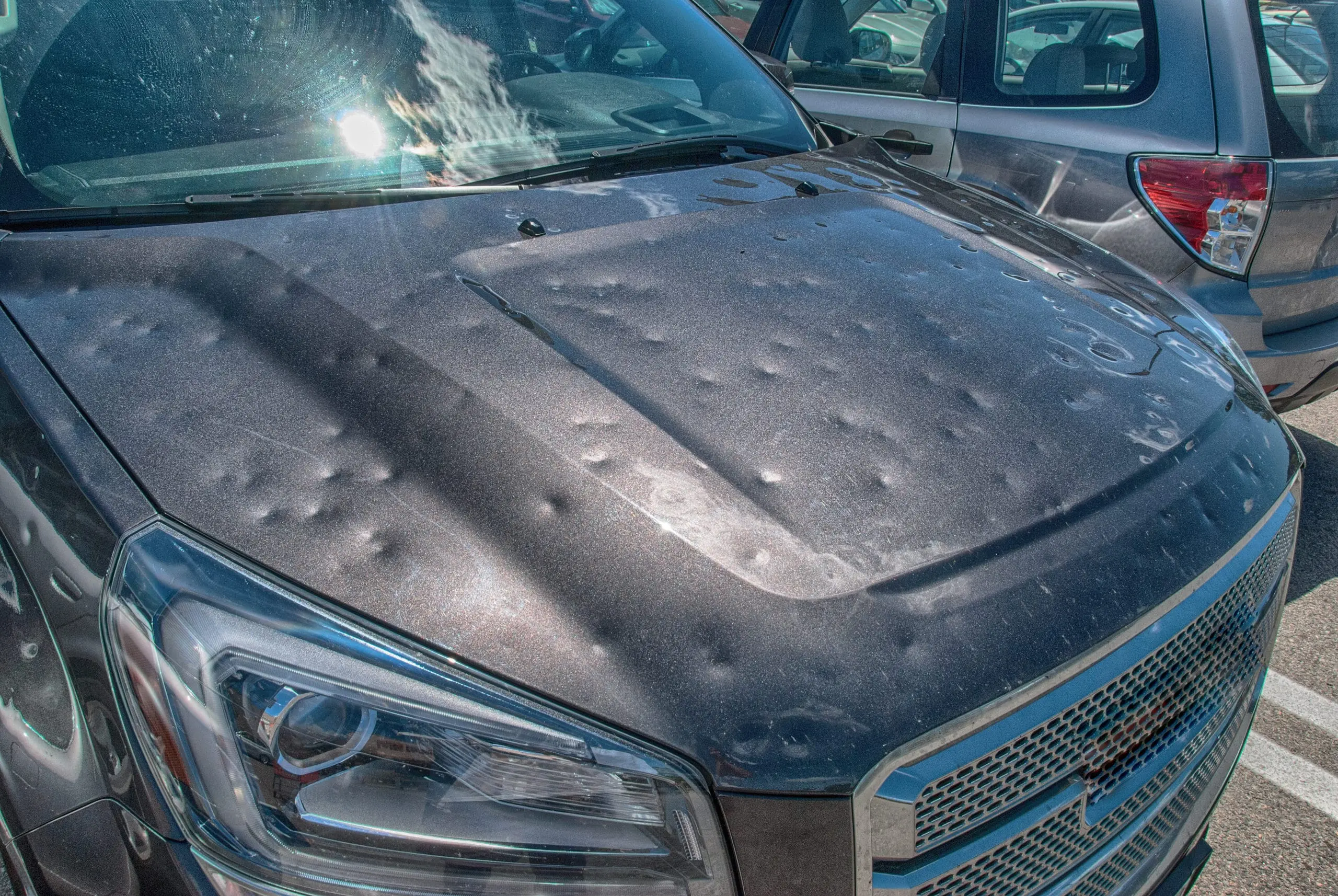
Start by examining the car’s exterior with methodical attention. Look closely at the roof, hood, trunk, and side panels, as these areas are most susceptible to hail impact. Damage typically presents itself as small, round indentations that can easily blend in with the vehicle’s surface. This kind of damage may go unnoticed if you’re rushing through the inspection. Make sure to check not just the body panels but also sensitive areas like mirrors and windows, which can suffer cracks or chips from hailstones.
Here are specific items to assess:
- Dents on metal surfaces
- Chips or cracks in glass
- Damage to side mirrors
- Impacts on headlights and taillights
But while visible damage is crucial to look for, not all damage is immediately apparent; therefore, it’s vital to conduct a thorough examination of hidden areas as well.
Hidden Damage
Many people might overlook subtle damage that can worsen over time.
To aid your examination, use a flashlight at different angles to spot dents or abnormalities that aren’t immediately visible in normal daylight. Shadows cast by tight angles of light can reveal imperfections that might otherwise escape your notice. Checking underneath your vehicle and within the wheel wells can also uncover hidden problems created by debris accumulation following a hailstorm.
Remember that early detection and reporting of hail damage not only improves the chances of a successful insurance claim but also protects your investment—keeping both the aesthetic and structural integrity of your vehicle intact. Take your time during this inspection; it’s an important first step on the path to getting back on the road without worry.
Choosing a Repair Shop
The process of choosing a repair shop for hail damage is not just about fixing your vehicle—it’s about ensuring that you feel secure and confident with that decision. You’ll want to consider various attributes of each shop, which can dramatically influence both your experience and the outcome of the repairs.
Research
In today’s world, there are many avenues for repair services; however, opinions vary on where to go. Some folks will argue in favor of sticking with repair shops recommended by insurance companies, believing they provide a sense of safety and assurance. Others lean toward independent shops for their personalized service and potentially more competitive pricing. Each choice has its merits, depending on what is most important to you as a customer. The former route offers peace of mind due to insurance endorsements, while the latter may cater better to specific needs or preferences.
As you begin your research, tap into online resources or social media groups dedicated to car enthusiasts. Websites like Yelp and Google Reviews can offer valuable insights from people who’ve navigated the hail damage repair process. It’s also beneficial to check local forums or community boards for first-hand accounts.
Criteria to Consider
When evaluating potential shops, focus on those specializing in hail damage repairs; their expertise becomes vital in the quality of work you’ll receive. Customer reviews become critical—the experiences of others can reveal patterns and highlight strengths or weaknesses you may not initially notice. Personal recommendations can carry weight too; friends or family who have had positive experiences can lead you to trustworthy options.
For instance, at Karl Malone’s Body and Paint, we pride ourselves on providing detailed estimates upfront and building lasting relationships with our customers through transparent communication. Such specialized shops often share similar principles—look for this dedication in any repair shop you consider.
After conducting thorough research and narrowing down your options based on these vital criteria, it’s time to get estimates.
Getting Estimates
Obtaining multiple estimates serves as a crucial step in this process. Ideally, aim for at least three different estimates, as this will empower you with information regarding costs and repair timelines. Beyond prices, inquire whether the shop offers warranties on their work—this can indicate their confidence in the job they perform.
When reviewing estimates, keep an eye on these key points:
- Cost of Repairs: Not only should you compare base costs but also any additional fees.
- Duration of Repair Work: Understanding how long your vehicle will be out of commission helps manage expectations.
- Warranty and Guarantees Offered: Reassurance that the service stands by its workmanship adds significant value.
By thoughtfully considering all these elements, you set yourself up for a successful experience during your hail damage repair journey. Each step taken in selecting the right repair shop brings you closer to restoring your vehicle back to its pre-damage condition with confidence and ease.
With these insights into selecting an appropriate repair shop, let’s explore the detailed procedures that follow in the repair timeline.
Steps in the Repair Process
The journey of repairing hail damage starts with an initial assessment once your vehicle arrives at the shop. Technicians will meticulously examine your car to confirm the extent of the damage. It is important they take their time here, as every dent and scratch must be cataloged accurately to ensure that nothing goes unnoticed. This stage often involves using specialized tools and lighting to reveal hidden imperfections that may not be visible to the average eye.
With the assessment complete, the technicians move forward into the bodywork and paint phase, where their expertise truly shines.
If you want to understand exactly what happens at each stage, our detailed guide on how to repair hail damage on a car breaks down the tools and techniques our technicians use.
Body Work and Paint
Steps typically include:
- Dent Repair: Technicians utilize specific tools designed for hail damage repairs, such as paintless dent repair kits. These tools allow them to push or pull out dents without affecting the original paint. This method is preferred because it maintains the integrity and finish of your vehicle.
- Repainting: In cases where the hail has damaged the paint significantly, affected areas will need repainting. The technicians will carefully blend new paint with existing colors for a seamless look.
- Final Inspection: After all repairs are made, your car undergoes a final inspection. This step is crucial for ensuring that everything is up to standards – both visibly and functionally.
Once repairs are certified complete, you’ll eventually reach the completion stage of this process, which is both exciting and nerve-wracking.
Completion
As you prepare to pick up your car, take a moment to gather yourself. It’s essential to inspect your vehicle carefully before driving off. Check for details like mismatched paint or any residual signs of damage that might have been overlooked during repairs. If you find something that doesn’t meet your satisfaction, don’t hesitate; address these concerns immediately with the repair shop staff. It’s in their best interest to ensure you’re completely satisfied with their work.
Understanding each step in this process—from initial assessments through completion—will help alleviate potential anxieties about repairs. Each phase contributes not only to restoring your vehicle but also to building confidence in your choice of repair shop and their capabilities.
Having walked through this intricate process, it becomes clear why staying informed is vital during challenging situations, especially when managing stress stemming from unforeseen events. Now let’s explore practical strategies for maintaining calm amid the turmoil.
Stress Management Tips
The hail damage repair process can indeed feel overwhelming, but finding ways to manage stress can make a world of difference. One important approach is to embrace the practice of staying organized. Keeping all your documents—insurance claims, repair estimates, or correspondence with professionals—neatly organized streamlines communication.
Imagine having everything you need right at your fingertips when speaking with an adjuster or a repair shop. This not only saves time but also reduces anxiety that arises from searching for critical information in moments of urgency.
A practical method is to create a dedicated folder—either digital or physical—where you can store all relevant paperwork. Label each section clearly so that finding information becomes effortless. This simple act can vastly improve your peace of mind.
Another essential tip for managing stress throughout the repair process is setting realistic expectations. Understand that repairs take time; it’s not uncommon for major fixes to span weeks before everything returns to normal. Recognizing that patience is part of the journey allows you to mentally prepare for delays. Instead of worrying about completion timelines, focus on how to utilize that time positively.
This leads us nicely into the concept of self-care, which should never be overlooked during stressful times. It’s vital to carve out moments for yourself amidst the chaos. Whether engaging in hobbies, spending quality time with loved ones, or simply enjoying a relaxing bath or a walk in nature, self-care activities help restore your mental equilibrium.
Implementing these strategies can aid significantly in alleviating stress as you navigate through the complexities of hail damage repair, providing you with a smoother path toward resolution and recovery.
In conclusion, managing stress effectively during this process requires organization and self-care. For additional support and more information about navigating the hail damage repair process, feel free to reach out to Karl Malone’s Body & Paint at (801) 553-5880.