
A small dent can become an expensive surprise at lease return or trade-in, and auto dent removal often becomes something drivers wish they had handled sooner. The bill usually arrives at the worst possible time, right when you are handing back the keys or trading them in.
Parking lots along Redwood Road, hailstorms rolling off the Oquirrh Mountains, and door dings at South Towne Center are everyday realities for drivers in Riverton, UT. Minor dents and dings accumulate quietly over a two or three-year lease. By the time the return date arrives, what looks like minor cosmetic damage can translate into real charges that catch drivers off guard.
At Karl Malone’s Body & Paint, we work with drivers throughout the Salt Lake Valley who are approaching a lease return or trade-in. Paintless dent repair, completed before the inspection, is one of the most practical steps a driver can take to protect their wallet and their vehicle’s value. This guide explains why that matters, what the numbers look like, and when to act.
What Leasing Companies Actually Look for at Inspection
Lease return inspections are more detailed than most drivers expect. An inspector, usually a third party hired by the leasing company, works through every panel on the vehicle with trained eyes and sometimes specialized lighting. They are not looking for perfection. They are looking for damage that falls outside what the lease agreement defines as normal wear and tear.
The Federal Reserve’s consumer guide to vehicle leasing notes that at the end of a closed-end lease, the lessor will arrange for a vehicle inspection. The guide also states that it is in the driver’s interest to be present during the inspection and carefully review the vehicle condition report.
When a Dent Becomes Chargeable Damage
Dents that exceed common wear-and-tear thresholds are often flagged during lease inspections. Many leasing companies use size-based wear-and-tear guidelines when evaluating dents. Damage that exceeds those guidelines may be considered chargeable at lease return. Because standards vary by manufacturer and leasing company, reviewing your lease agreement and pre-return inspection report is important. Multiple small dents on the same panel can also result in charges, even if each dent individually falls within acceptable limits.
What Dents Actually Cost at Lease Return
For many drivers, the biggest surprise is how much lease-end dent charges can exceed the cost of addressing the damage independently.
| Repair Scenario | Independent PDR Cost | Leasing Company Charge |
| Small dent (under 1 inch) | $75 to $150 | $150 to $300 per panel |
| Medium dent (1 to 3 inches) | $150 to $350 | $300 to $500 per panel |
| Multiple dents, one panel | $200 to $400 | $500 or more |
| Hail damage (multiple panels) | Varies by severity | $1,000 or more |
| Traditional body repair alternative | $300 to $1,200 | $500 to $2,500+ |
*Lease-end charges vary by leasing company, vehicle condition, inspection findings, and lease agreement terms. Figures shown reflect commonly reported industry ranges rather than fixed fees.
Independent paintless dent removal typically costs 40 to 70 percent less than what a leasing company charges for the same repair. The reason is simple. When the leasing company books the repair, you have no say in which shop they use, what method they apply, or what rate they pay. You receive the bill after the fact.
A Riverton Scenario: The Parking Lot Problem
Consider a Riverton driver who leased a Toyota RAV4 three years ago. During that time, a shopping cart clipped the rear passenger door in a parking lot near the Towne Center, leaving a two-inch dent. A small door ding appeared on the driver’s side from a careless neighbor. A hail event last spring left three minor impressions on the hood.
None of these affected how the vehicle drove. None triggered an insurance claim. But at lease return, each one sits outside the acceptable threshold. The leasing company’s inspector documents all five affected areas. The bill arrives weeks later for $1,100.
A visit to Karl Malone’s Body & Paint for paintless dent repair near Riverton, UT, before that inspection would have addressed all of those dents for a fraction of that cost. The factory paint would remain intact. The inspection would show a clean vehicle. The driver would keep the difference.
How PDR Protects Trade-In Value Too
Lease returns are not the only situation where dents cost drivers money. Trade-in appraisers at dealerships use visible damage to justify lower offers. A vehicle with several door dings and minor dents will consistently receive a lower appraisal than an identical vehicle in clean condition.
Auto dent repair before a trade-in appraisal is often one of the most cost-effective ways to improve a vehicle’s appearance before valuation. Removing visible dents before a trade-in or private sale can improve buyer perception and may help support a stronger appraisal or sale price, depending on the vehicle’s age, condition, and market demand.
Why Factory Paint Matters to an Appraiser
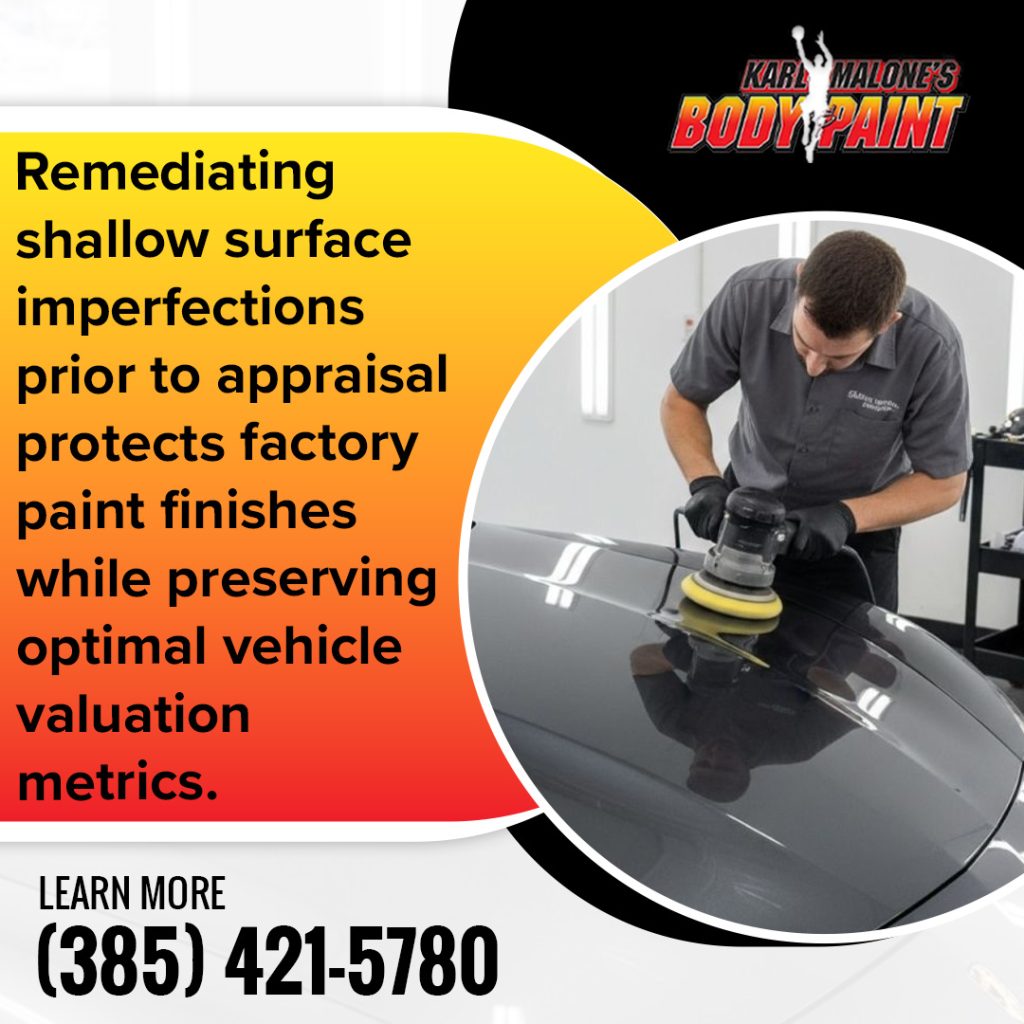
Paintless dent removal preserves the factory paint surface, which matters specifically to appraisers. A vehicle that has been repainted, even on a single panel, raises questions about past damage. PDR leaves no evidence that a dent was ever there because the original paint is never disturbed.
What Makes PDR the Right Choice Before a Return or Trade-In
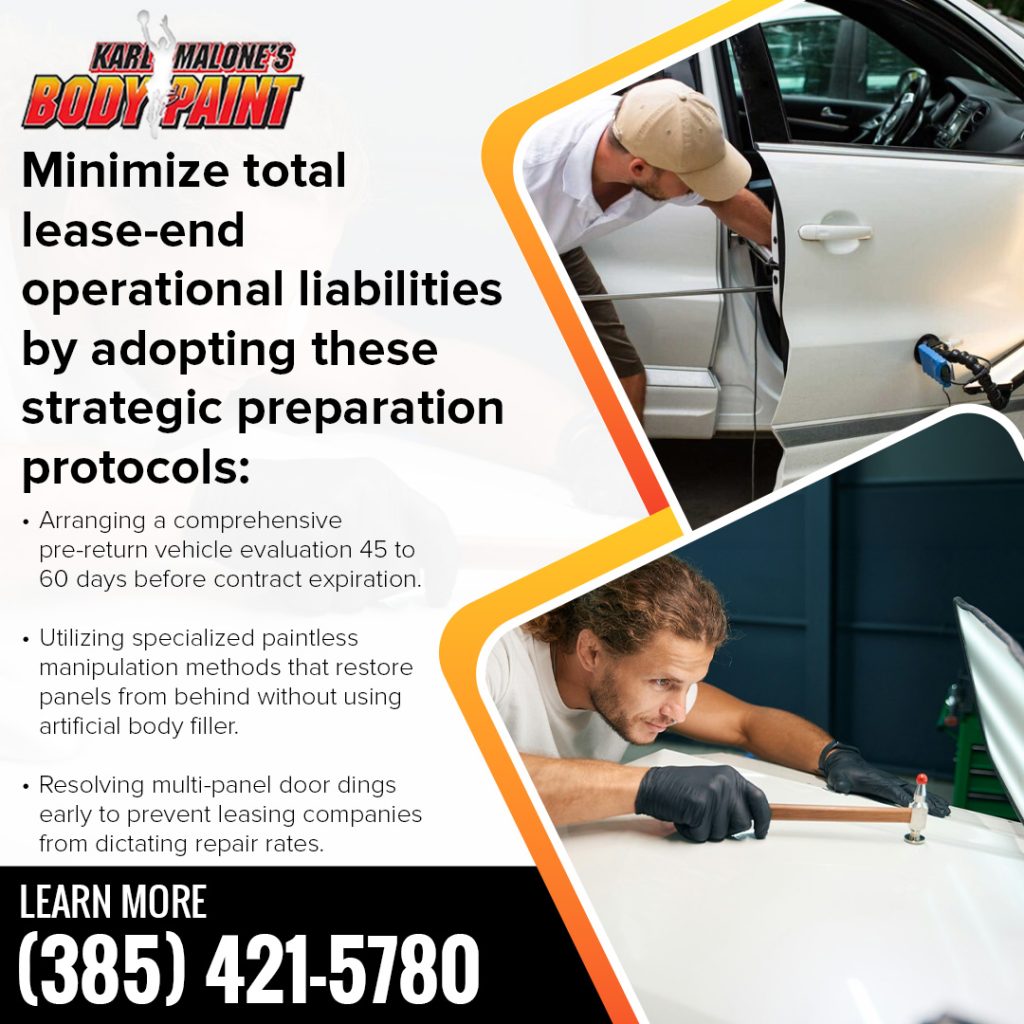
Paintless dent repair (PDR) is a technique that uses specialized tools to reshape dented metal from behind the panel without applying filler or paint. The process works on dents where the paint surface remains intact. It is not suitable for dents with cracked or chipped paint, sharp creases, or damage to structural panels.
For the types of damage that accumulate during normal vehicle use, including door dings, hail impressions, and minor parking lot impacts, PDR is well-suited. The repair typically takes one to four hours, depending on the number and size of dents. The vehicle leaves with its original factory paint fully intact, which is exactly what leasing companies and trade-in appraisers want to see.
At Karl Malone’s Body & Paint, auto dent removal is performed by trained technicians using proper lighting and the full range of PDR tools. Every repair is documented so drivers have a clear record to present at inspection if needed.
How Far in Advance Should You Act?
Timing matters. Most leasing companies offer a pre-return inspection around 45 to 60 days before the lease end date. That inspection gives you a preview of what the official return inspection will flag. It also gives you time to address those items independently before the final return date.
The 90-Day Rule for Lease Returns and Trade-Ins
The recommended approach is to schedule a PDR assessment at least 60 to 90 days before the lease end date. This provides enough time to complete repairs, gather documentation, and arrange the pre-return inspection without rushing.
For drivers considering a trade-in, the same logic applies. Bring the vehicle to Karl Malone’s Body & Paint for an assessment before approaching a dealership. A clean vehicle with documented repairs and intact factory paint consistently receives stronger offers.
Ask the Shop: A Different Take on the Usual Q&A
Rather than the standard question-and-answer format, here are the questions our customers actually ask when they call about a lease return or trade-in, along with direct answers.
“My lease is up in six weeks. Is that enough time?”
Six weeks is workable for most repairs. A straightforward PDR job on one or two panels can be completed in a single visit. If there is hail damage across multiple panels, booking sooner gives the shop time to work through each area properly. Call as soon as you know the return date.
“Will paintless dent removal show up on a vehicle history report?”
No. Paintless dent repair does not involve insurance claims, panel replacement, or paint work. It leaves no record on a vehicle history report. The factory paint stays intact, and no body shop record is generated for the repair itself.
“The dents are small. Can I just let the leasing company handle it?”
You can, but the cost difference is rarely in your favor. A dent that an auto dent repair specialist addresses for $100 may appear on a lease return bill at $250 or more. You also lose the ability to choose the repair method, the shop, or the timeline. Addressing it independently puts you in control of both the quality and the cost.
“I’m trading in, not returning a lease. Does paintless dent repair still make sense?”
Yes, and the math is similar. Appraisers discount visibly damaged vehicles. A clean vehicle with intact factory paint may be viewed more favorably during the appraisal process. In many cases, the cost of paintless dent repair may be partially or fully offset by a stronger trade-in appraisal, depending on the vehicle, market conditions, and the extent of the damage.
“Does PDR work on hail damage from that storm last spring?”
Hail damage is one of the most common applications for paintless dent removal. The Wasatch Front sees significant hail activity in spring and early summer. As long as the paint surface is intact, the individual hail dents are well-suited to PDR. Multiple panels can be addressed in a single visit.
Key Takeaways
- Lease inspections often flag dents that exceed normal wear-and-tear guidelines.
- Paintless dent repair typically costs less than lease-end damage charges.
- Small dents and door dings can reduce both lease-return outcomes and trade-in offers.
- PDR preserves the original factory paint, which is important for appraisals and inspections.
- Scheduling an assessment 60 to 90 days before a lease return or trade-in provides time to address dent damage before it affects vehicle value.
Schedule Your PDR Assessment Before It Costs You More
Auto dent removal is not a luxury service for drivers approaching a lease return or trade-in. It is a practical financial decision. Addressing dents before the inspection or appraisal keeps repair costs in your control and prevents the leasing company or dealership from setting the price on your behalf. Even minor dents that seem harmless today can affect inspection results, appraisal values, and out-of-pocket costs later.
Karl Malone’s Body & Paint serves drivers across the southern Salt Lake Valley and surrounding communities. Drivers seeking PDR near Riverton, UT, can visit our facility at 11535 South Lone Peak Parkway, Draper, UT 84020, or contact us at (801) 553-5880 or RBeck@GoMalone.com. If your lease return or trade-in is approaching, an assessment before the inspection date can help identify dent damage that may result in additional charges or affect resale value.