
Dents can be repaired in more than one way, and each approach has its place. Paintless dent removal keeps the original paint intact and works best for light damage, while traditional repair techniques offer lasting results for deeper or more complex dents. Knowing the difference helps drivers make the best choice for their situation.
At Karl Malone’s Body & Paint, we help Draper vehicle owners understand their repair options. Our technicians evaluate each dent’s characteristics to recommend the most appropriate method. We serve customers throughout Utah County with both paintless dent repair and traditional collision repair services, backed by our Toyota Collision Centre, Ford National Body Shop Network, and GM Collision Repair Network certifications.
You might have several questions about how these two repair processes differ and how to decide which one suits your situation best. Don’t worry; we’ve broken it down for you. Here’s what you need to know before choosing between paintless and traditional dent removal.
What Is the Main Difference Between PDR and Traditional Repair?
PDR uses specialized tools to reshape metal without affecting paint. This process works from behind the damaged panel, gradually massaging dents back to their original form. The technique requires no sanding, filling, or refinishing materials.
Traditional repair involves multiple steps, including sanding, body filler application, and complete repainting. This method addresses damage that has compromised the paint surface or stretched the metal beyond repair. The process takes longer but handles more severe damage types.
The fundamental difference lies in paint preservation. Paintless dent repair maintains your vehicle’s original factory finish, while traditional methods create a new painted surface. This distinction affects both repair time and long-term vehicle value.
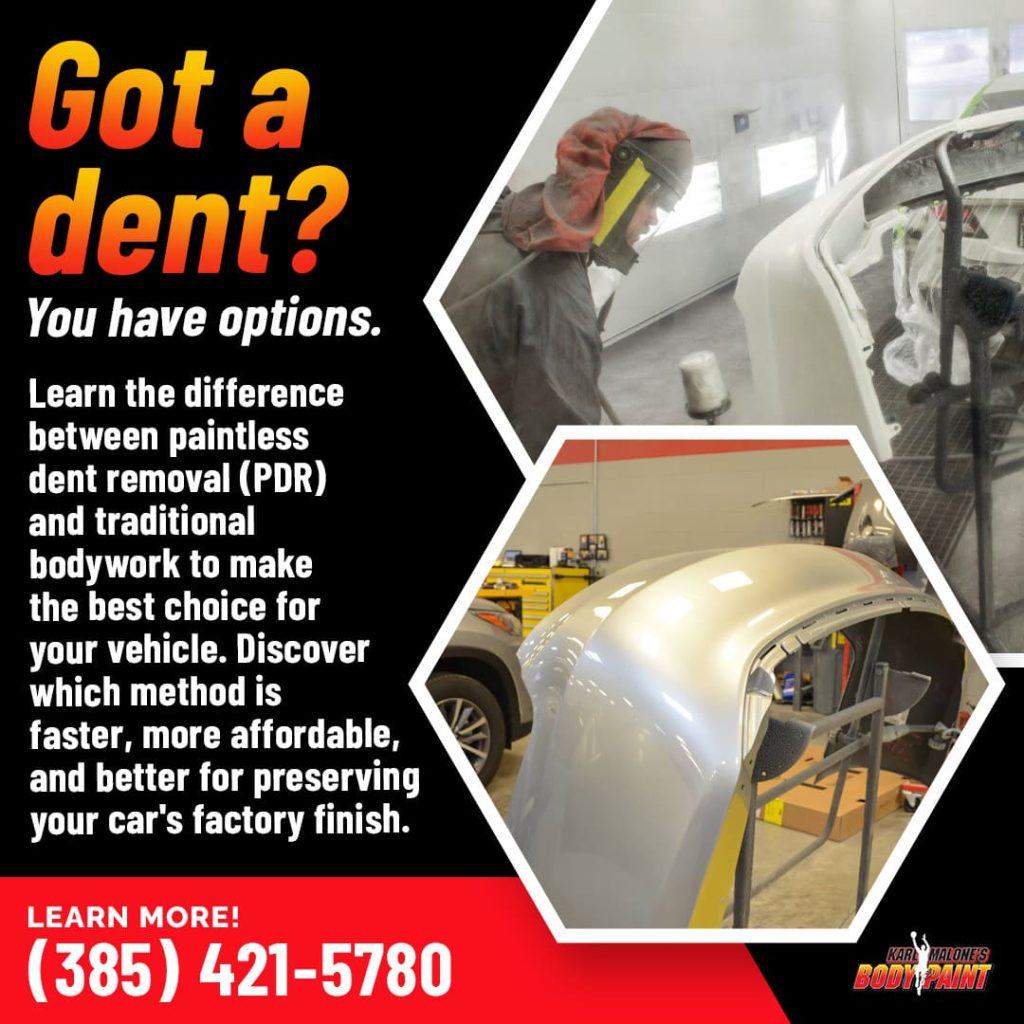
How Much Does Paintless Dent Removal Cost in Draper, UT?
Small dents under 2 inches typically cost $75-$150 for PDR. Medium dents ranging from 2-4 inches cost $150-$250. Large dents over 4 inches can reach $250-$400, depending on location and accessibility.
Traditional dent repair is generally much costlier than paintless dent repair because it involves more labor and materials. Comparable damage repaired through conventional methods can end up costing several times more per panel.
Several factors influence paintless dent removal cost:
- Dent location: Roof and curved panels require more skill and
- Access difficulty: Limited access increases labor time
- Dent depth: Shallow dents repair more easily than deep impressions
- Metal type: Aluminum panels need specialized techniques
- Vehicle make: Luxury vehicles often cost more to repair
Multiple dents often qualify for bulk pricing discounts. Karl Malone’s Body & Paint provides transparent estimates before beginning any work, helping customers make learned decisions about their repair investment.
When Should I Choose PDR Over Traditional Methods?
Paintless dent removal works best for shallow dents without paint damage. Ideal candidates include hail damage, door dings, and minor parking lot impacts. The paint must remain intact with no chips, scratches, or cracks.
Traditional repair becomes necessary when paint is compromised or metal is severely stretched. Deep creases, sharp dent edges, and damaged paint require conventional methods. Previous bodywork or aftermarket paint also limits paintless repair options.
Vehicle age and condition affect method selection. Newer vehicles with pristine paint benefit most from paintless dent repair. Older vehicles with existing paint issues may not justify the premium cost of maintaining original finishes.
How Long Do Each of These Repair Methods Take?
Paintless dent removal typically completes within 2-4 hours for standard dents. Simple door dings may finish in under an hour. Complex repairs involving multiple dents or difficult access can take a full day.
Traditional bodywork requires 3-7 days, depending on damage extent. Paint curing time adds significant duration to the repair process. Weather conditions and shop scheduling can extend timelines further.
Time considerations affect more than convenience. Rental car costs, work schedule disruptions, and family transportation needs all factor into repair decisions. We coordinate rental assistance to minimize customer inconvenience during longer repairs.
Which Repair Method Provides Better Long-Term Results?
Paintless dent removal provides permanent results when properly executed. The original factory finish remains intact with no risk of paint-matching issues. No evidence of repair remains visible upon completion.
Traditional repairs create durable results but involve multiple material layers. Paint adhesion, color matching, and blending quality determine long-term appearance. Professional application prevents future problems like peeling or discoloration.
Both methods offer warranties when performed by certified technicians. Karl Malone’s Body & Paint stands behind all repairs with comprehensive guarantees. Our 4.7-star Google rating with over 700 reviews reflects consistent quality across both repair types.
What Are the Environmental Differences Between These Methods?
Paintless dent removal generates minimal environmental waste. No chemical solvents, paints, or disposal materials are required. The process supports sustainability by preserving existing vehicle components.
Traditional bodywork involves volatile organic compounds and hazardous materials. Paint booth emissions, solvent usage, and material waste create environmental considerations. Modern shops follow strict regulations to minimize impact.
According to the U.S. Environmental Protection Agency (EPA), automobile refinishing coatings are regulated under national VOC standards to help reduce air pollution.
Does Insurance Cover Both Types of Dent Repair?
Most insurance policies cover PDR without complications. The lower repair costs often fall below deductible amounts, making out-of-pocket payment practical. Storm damage claims frequently specify PDR as the preferred method.
Traditional repair coverage depends on damage severity and policy terms. Higher costs typically exceed deductibles, triggering full insurance involvement. Claims processing may take longer due to adjuster requirements and estimate negotiations.
We work directly with all major insurance companies. We handle paperwork, coordinate with adjusters, and expedite claim processing. Our goal is to make the repair experience as smooth and stress-free as possible, keeping you informed every step of the way.
How Do I Know Which Method Is Right for My Vehicle?
Damage analysis determines the appropriate repair method. Professional evaluation identifies paint condition, metal integrity, and accessibility factors. Not all dents qualify for paintless removal despite initial appearance.
Budget and timeline priorities influence decision-making. PDR offers speed and cost advantages when applicable. Traditional methods provide comprehensive solutions for complex damage.
Vehicle value considerations matter for repair investment decisions. Higher-value vehicles justify premium repair methods to maintain resale potential. Older vehicles may benefit from cost-effective approaches that restore functionality without excessive expense.
Can Paintless Dent Repair Fix Any Size Dent?
PDR has limitations based on damage characteristics. Dents larger than 6 inches or deeper than half an inch often exceed PDR capabilities. Sharp creases and stretched metal typically require traditional methods.
Location accessibility affects repair possibilities. Dents near panel edges or in areas with limited behind-panel access may not qualify for paintless repair. Body structure and reinforcements can block tool access.
Each vehicle is different, so a professional inspection is the best way to determine whether PDR is the right solution. Experienced technicians can evaluate paint condition, panel flexibility, and access points to recommend the most effective and cost-efficient repair method.
What Makes Karl Malone’s Body & Paint Different for These Repairs?
Our certified technicians possess extensive experience with both repair methods. Continuous training keeps our team current with evolving techniques and materials. We evaluate each vehicle individually to recommend ideal repair approaches.
Karl Malone’s Body & Paint maintains industry certifications that guarantee quality standards. Our recognized affiliations with several major manufacturers showcase our ongoing commitment to excellence and industry-leading quality. Advanced equipment supports both paintless and traditional repair capabilities.
Located conveniently in Draper, we serve customers throughout Utah County and the surrounding areas. Our facility includes modern paint booths, specialized PDR equipment, and customer amenities. We coordinate rental cars, insurance claims, and scheduling to minimize disruption to your routine.
Will My Vehicle Look the Same After Paintless Dent Repair?
Properly executed paintless dent repair restores panels to factory specifications. The original paint finish remains completely intact. No color matching or blending concerns exist with this method.
Traditional repairs can achieve excellent results but involve a new paint application. Color-matching technology provides close matches to original finishes. Professional application and curing prevent future appearance issues.
Quality depends heavily on technician skill and equipment sophistication. We invest in ongoing training and advanced tools to deliver superior results with both methods.
What Should I Expect During the Repair Process?
Paintless dent repair begins with thorough damage evaluation. Our technicians inspect paint condition, dent characteristics, and access requirements. We explain the process and provide time estimates before starting work.
Traditional repair involves multiple stages with regular progress updates. Disassembly, bodywork, primer application, painting, and reassembly each require specific timeframes. We communicate progress throughout the process.
Both methods include final quality inspections before delivery. We review completed work with customers to ensure satisfaction. Warranty information and care instructions accompany finished repairs. Our commitment doesn’t end at delivery; we remain available for any follow-up questions or post-repair support you may need.

At a Glance: Comparing Paintless and Traditional Dent Repair
| Feature | Paintless Dent Removal (PDR) | Traditional Bodywork |
| Paint Damage | No repainting required; preserves factory finish | Requires sanding, filler, and repainting |
| Repair Time | 1–4 hours (same day in most cases) | 3–7 days depending on damage |
| Cost Range (Draper, UT) | $75–$400 | $300–$1,500+ |
| Environmental Impact | Eco-friendly; no chemicals or waste | Involves paints, solvents, and VOC emissions |
| Best For | Small to medium dents, hail damage, door dings | Deep dents, paint cracks, structural damage |
| Result | Original finish retained; no color mismatch | New paint applied; may require blending |
How Can I Get My Dent Repaired at Karl Malone’s Body & Paint?
Start with our professional assessment to determine the best repair approach. We examine damage characteristics, evaluate repair options, and provide detailed cost estimates. Our goal is to help you make ideal decisions about your vehicle’s restoration.
Schedule your consultation to explore paintless dent removal in Draper, UT, today. We explain available methods, timeline expectations, and insurance coordination options. Our transparent process eliminates surprises and delivers customer satisfaction every time.
Experience Expert Care with Karl Malone’s Body & Paint
Call (385) 421-5780 or email RBeck@GoMalone.com to discuss your repair needs. Karl Malone’s Body & Paint combines the reliability of NBA Hall of Fame standards with advanced automotive repair expertise. Experience the difference that professional care makes for your vehicle’s restoration.