A dent doesn’t care what season it is, but the repair process does, at least a little. If you’ve wondered whether summer heat or winter cold changes how a dent behaves or how easily it can be fixed, the answer involves real material science, not just marketing talk. Here’s what Karl Malone’s Body & Paint says actually happens and what it means if you’re considering paintless dent removal.
How Temperature Affects Your Car’s Metal and Paint
Metal body panels expand slightly as temperatures rise and contract as temperatures fall. While normal seasonal temperatures do not dramatically change the strength of automotive steel or aluminum, warmer panels generally allow technicians to manipulate the metal more safely because the paint and surrounding materials are less brittle. Collision repair professionals commonly observe that cold, contracted metal is more resistant to reshaping and more prone to paint cracking if handled without care during a repair.
This matters for a simple reason. Auto dent removal techniques rely on carefully manipulating the metal back into shape from behind the panel. More rigid metal takes more precise pressure and often some deliberate warming to reduce the risk of stressing the paint above it. None of this means a dent gets physically worse in cold weather. It means the margin for error during auto dent removal gets smaller.
Why DIY Heat Methods Carry Real Risk
It’s common to find online tips suggesting that small dents can be removed with hot water or a hair dryer. While heat can make metal more workable, applying it without the right tools or technique can damage your vehicle’s finish.
Comparing DIY and Professional Dent Repair
| DIY Heat Methods | Professional Paintless Dent Repair (PDR) |
| Uses household items such as a hair dryer or hot water | Uses professional tools and controlled heat when needed |
| Heat application can be uneven or excessive | Heat is carefully controlled to protect the paint finish |
| May damage paint, clear coat, trim, or adhesives | Designed to preserve the factory paint whenever possible |
| Results are unpredictable and depend on the dent | Repair approach is based on the dent’s size, location, and accessibility |
| No assessment of hidden damage | Technicians inspect the dent before recommending the appropriate repair |
The biggest difference isn’t the use of heat – it’s the precision, control, and inspection that help professionals achieve consistent results while minimizing the risk of additional damage.
Does Weather Actually Affect Professional PDR Repair
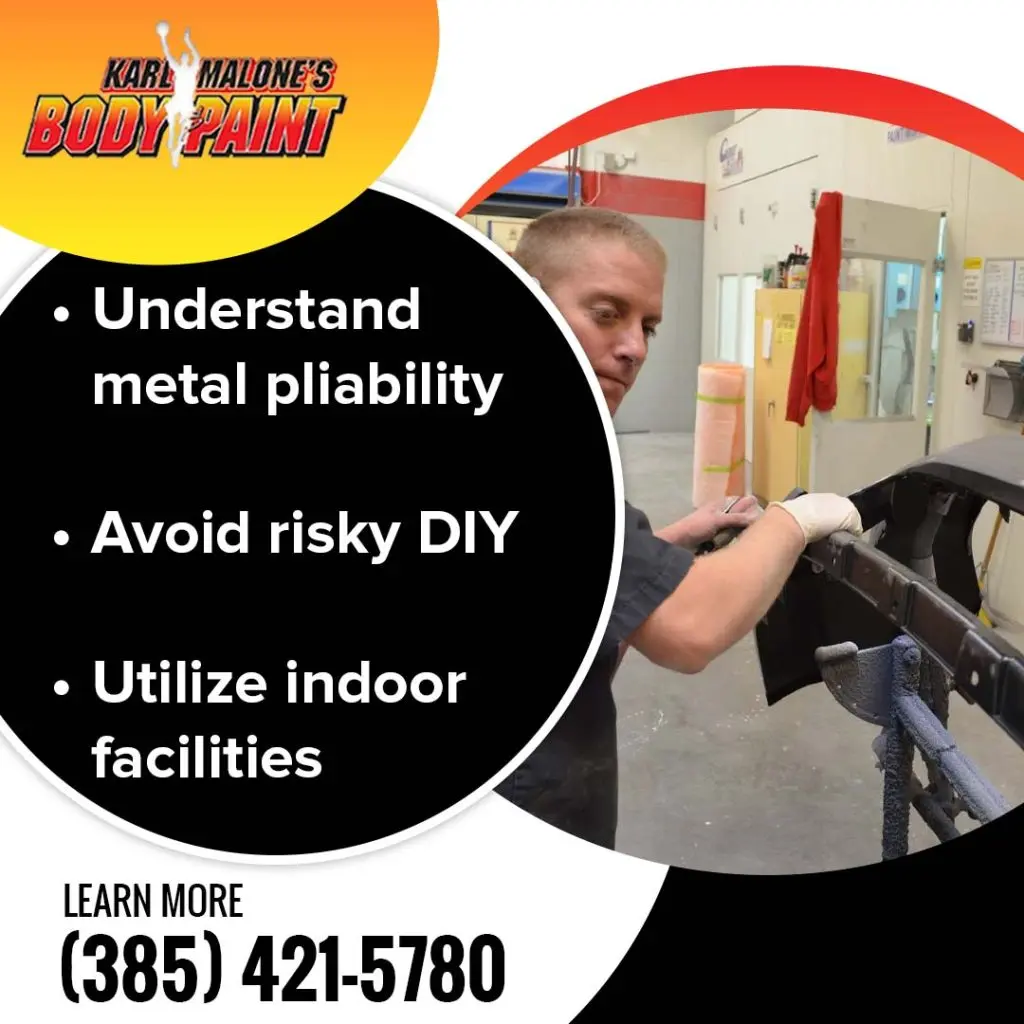
For professional work, weather matters far less than most people assume. Paintless Dent Removal is typically performed indoors, in a shop environment where the temperature stays consistent regardless of what’s happening outside. That controlled setting removes most of the variability that affects outdoor or DIY attempts.
In colder months, technicians may pre-warm a panel before working on it, improving flexibility and reducing cracking risk. In warmer months, they simply account for the fact that metal is naturally more pliable. Either way, paintless dent repair isn’t something you need to schedule around the seasons.
How Is the Right Auto Dent Repair Solution Determined
Drivers across the Salt Lake Valley experience everything from freezing winters to hot summers and occasional hailstorms, with winter lows commonly in the high teens and summer highs regularly climbing into the high 80s and low 90s, according to the National Weather Service. That range means dents happen year-round, not just in one season.
If you’re in Riverton or the surrounding area, Karl Malone’s Body & Paint can determine whether paintless dent removal is the right solution. To recommend the appropriate repair, technicians typically evaluate:
- Dent size and depth
- Whether the paint is cracked or chipped
- The dent’s location and panel accessibility
- Whether the metal has been stretched
- Whether paintless dent removal or conventional repair is more suitable
Getting a Dent Looked at Sooner Rather Than Later
Temperature affects technique, not whether a repair is worth doing. Waiting for warmer weather isn’t necessary, and attempting a DIY fix with a hair dryer or hot water carries more risk than it saves. If you’re comparing PDR near Riverton, UT, look for a shop that repairs indoors year-round rather than one limited by outdoor conditions.
Karl Malone’s Body & Paint handles dent assessments and repairs regardless of the season, using controlled techniques suited to the panel and the damage in front of them. As a local resource for paintless dent repair near Riverton, UT, we welcome questions about timing or technique before you decide how to proceed. If you have a dent you’ve been putting off, reach out at (801) 553-5880 or RBeck@GoMalone.com to have it looked at.